We investigate three approaches to improving the safety of high-energy batteries. We develop solid polymer electrolytes for operation across a wide temperature range and study fire-retardant separators that limit flammability while maintaining ion transport and mechanical integrity. We also explore thermally conductive graphene current collectors to spread heat and reduce local temperature gradients.
Solid-state batteries · Solid polymer electrolytes · High-thermal-conductivity graphene current collectors
Solid Polymer Electrolytes (Battery Energy Density & Wide-Temperature Operation)
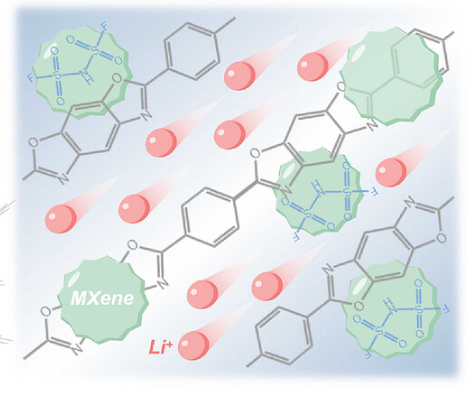
We develop solid polymer and hybrid electrolytes for operation across a wide temperature range. We examine how organic–inorganic structure and electrode contact affect ion conduction, mechanical stability and interfacial resistance.
Related publications
Polymer and hybrid electrolyte architectures
- Z. Yang, C. Li, C. Chang, … R. Tan, G. Zhou, J. Yang, “Mechanically, Thermally, and Interfacially Robust Solid Polymer Electrolytes Enabled by an Organic–Inorganic Interwoven Architecture,” Advanced Materials, 2026, e74586. DOI
- J. Lai, Y. Hu, F. Yang, B. Hong, M. Wang, R. Tan, J. Li, “Stabilizing the anodic interface for solid-state lithium metal batteries by combining a low-strain lithium/carbon anode with a polymer electrolyte,” Chemical Communications, 2025, 61(95), 18814-18817.
- M. Zhang, R. Tan, M. Wang, Z. Zhang, C. J. Low, Y. Lai, “Hypercrosslinked porous and coordination polymer materials for electrolyte membranes in lithium‐metal batteries,” Battery Energy, 2024, 20230050.
- Z. Wang, R. Tan, H. Wang, L. Yang, J. Hu, H. Chen, F. Pan, “A Metal–organic‐framework‐based electrolyte with nanowetted interfaces for high‐energy‐density solid‐state lithium battery,” Advanced Materials, 2018, 30(2), 1704436.
- L. Yang, Z. Wang, Y. Feng, R. Tan, Y. Zuo, R. Gao, Y. Zhao, L. Han, Z. Wang, F. Pan, “Flexible composite solid electrolyte facilitating highly stable “soft contacting” Li–electrolyte interface for solid state lithium‐ion batteries,” Advanced Energy Materials, 2017, 7(22), 1701437.
- R. Tan, R. Gao, Y. Zhao, M. Zhang, J. Xu, J. Yang, F. Pan, “Novel Organic–Inorganic Hybrid Electrolyte to Enable LiFePO4 Quasi-Solid-State Li-Ion Batteries Performed Highly around Room Temperature,” ACS Applied Materials & Interfaces, 2016, 8(45), 31273-31280.
Related solid-state ion transport and temperature-dependent cell performance
- Y. Feng, R. Tan, Y. Zhao, R. Gao, L. Yang, J. Yang, H. Li, G. Zhou, H. Chen, F. Pan, “Insight into fast ion migration kinetics of a new hybrid single Li-ion conductor based on aluminate complexes for solid-state Li-ion batteries,” Nanoscale, 2018, 10(13), 5975-5984.
- B. Zhang, R. Tan, L. Yang, J. Zheng, K. Zhang, S. Mo, Z. Lin, F. Pan, “Mechanisms and properties of ion-transport in inorganic solid electrolytes,” Energy Storage Materials, 2018, 10, 139-159.
- R. Tan, J. Yang, J. Zheng, K. Wang, L. Lin, S. Ji, J. Liu, F. Pan, “Fast rechargeable all-solid-state lithium ion batteries with high capacity based on nano-sized Li2FeSiO4 cathode by tuning temperature,” Nano Energy, 2015, 16, 112-121.
Fire-Retardant Separators (Battery Safety)
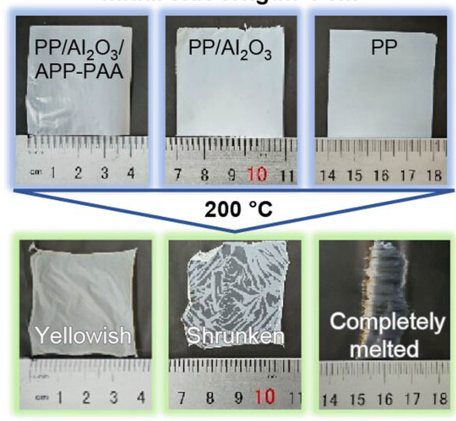
We investigate fire-retardant separators that preserve ion transport and mechanical integrity. Our composite-separator study examined fire extinguishment and lithium deposition. Work on flame-retardant crosslinked polymers provides complementary evidence at the electrode level.
Related publications
Fire-retardant separators
- Dai et al. Safety-engineered composite separator for lithium metal batteries. Interdisciplinary Materials (2026). DOI
Related flame-retardant materials and battery safety
- G. Chen, R. Tan, C. Zeng, et al, “Developing safe and high-performance lithium-ion batteries: Strategies and approaches,” Progress in Materials Science, 2025, 101516.
- C. Shi, Z. Li, M. Wang, S. Hong, B. Hong, Y. Fu, D. Liu, R. Tan, P. Wang, Y. Lai, “Electrolyte tailoring and interfacial engineering for safe and high-temperature lithium-ion batteries,” Energy & Environmental Science, 2025, 18, 3248. DOI
- Y. Gan, M. Liu, R. Tan, C. Pan, L. Liu, S. Zhou, Z. Zou, G. Chen, L. Xian, X. Cheng, L. Li, L. Li, W. Ao, J. Yang, “Flame‐Retardant Crosslinked Polymer Stabilizes Graphite–Silicon Composite Anode for Self‐Extinguishing Lithium‐ Ion Batteries,” Advanced Energy Materials, 2022, 12(45), 2202779.
Advanced Current Collectors (Battery Energy Density & Safety)
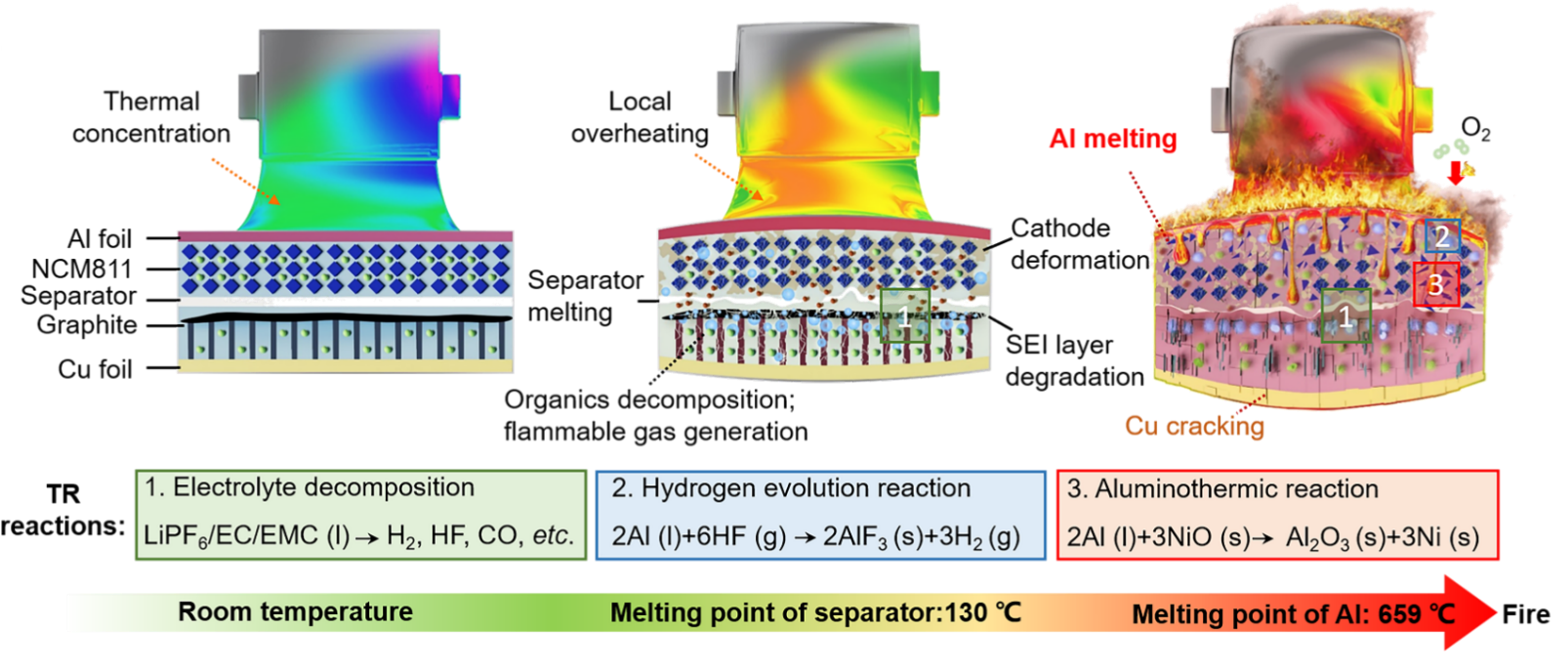
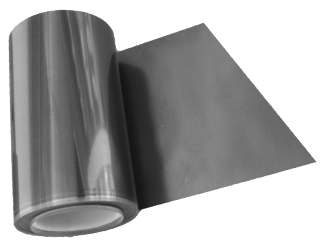
We develop graphene-based current collectors to spread local heat in high-energy cells. Our large-area fabrication study examined how collector structure and thermal conductivity affect heat transfer and the response of pouch cells to local heating.
Related publications
Current-collector design, manufacture and heat transfer
- L. Li, J. Yang, R. Tan, W. Shu, C. J. Low, Z. Zhang, et al, “Large-scale current collectors for regulating heat transfer and enhancing battery safety,” Nature Chemical Engineering, 2024, 1(8), 542-551. DOI
- H. Hao, R. Tan, C. Ye, C. T. J. Low, “Carbon‐coated current collectors in lithium‐ion batteries and supercapacitors: Materials, manufacture and applications,” Carbon Energy, 2024, e604.
Related industrial and end-of-life considerations
- B. Robinson, J. Yang, R. Tan, S. Alekseev, C. T. J. Low, “Rethinking the Roles of Graphite and Graphene in Lithium‐ Ion Batteries From Environmental and Industrial Perspectives,” Carbon Energy, 2026, 8(1), e70099.
- J. Yang, B. Robinson, H. Hao, J. Zhu, D. Tian, Z. Ye, B. Dong, K. Yang, S. R. P. Silva, Y. Zhao, X. Liu, R. Tan, C. T. J. Low, “Closing the Loop From Waste to Resource: A Comprehensive Review on Recycling Current Collectors in Lithium‐Ion Batteries,” cMat, 2025, 2(4), e70026.